WAD Lumps and Zone Memory
Doom’s data model is organized around WAD files and named lumps, not a modern hierarchy of individually loaded assets. w_wad.c and w_wad.h build the directory of lump metadata, provide name and number lookup, and expose the cache operations used by rendering, level setup, sounds, and menus.
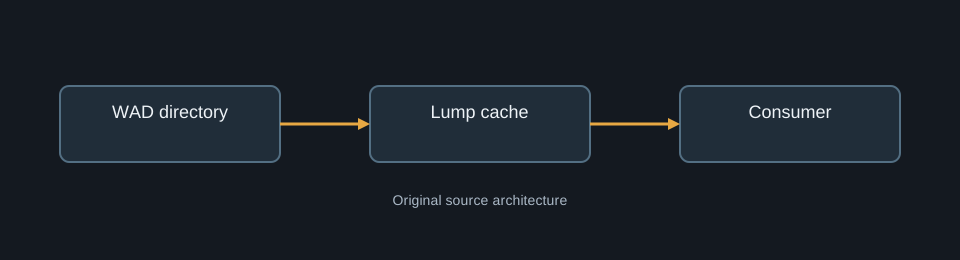
A lump is deliberately generic. It may contain a map block, texture definition, palette, sprite, sound, or some other typed resource; the consuming subsystem determines the interpretation. This is why source traces should pair a W_CacheLump... call with the reader that casts or parses the returned bytes rather than assuming that the cache layer knows the semantic type.
Zone allocation
z_zone.c and z_zone.h provide Doom’s zone allocator. The zone records allocation tags and supports purgeable cached data, allowing resource ownership and eviction policy to be expressed through the allocator interface rather than by a separate general-purpose asset manager. WAD caching and zone memory therefore form one design: lump directory lookup identifies data, while tagged allocation controls its residency.
The arrangement is strongly shaped by the original memory environment. It is still a useful lesson in explicit resource lifetimes: consumers obtain data through a stable index or name, cached blocks carry category information, and systems do not need to know the physical file layout once initialization has built the lump directory.